


Quanhai International Trading Co., Ltd.
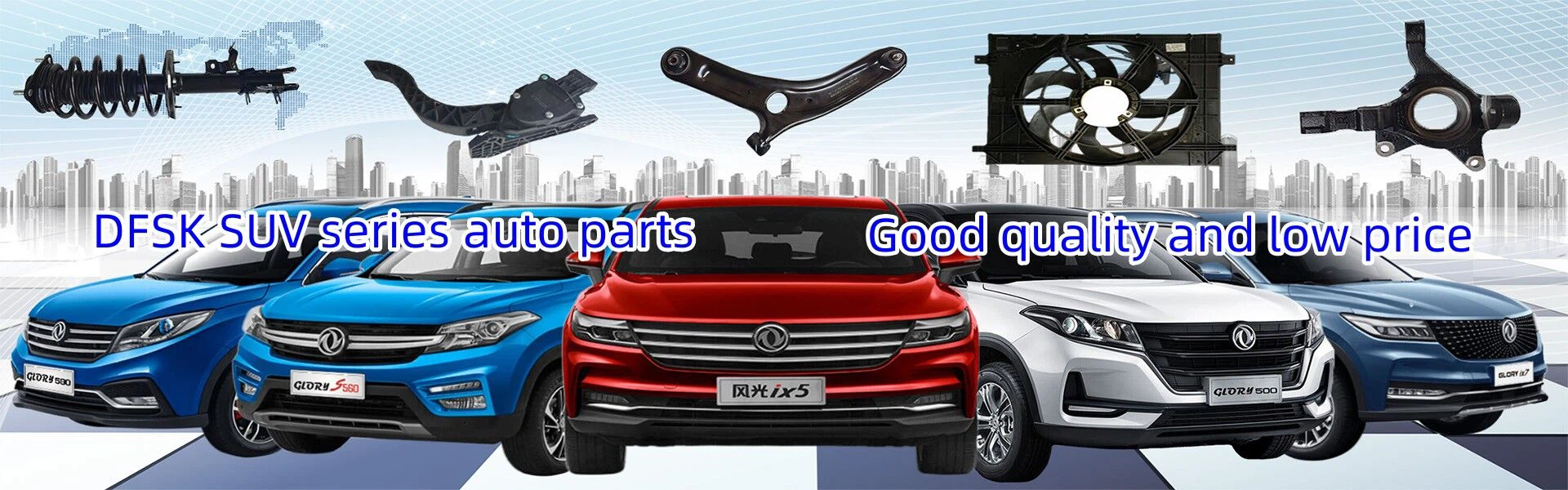
Quanhai International Trading Co., Ltd.founded in 2000, has over 25 years of industry experience. The company specializes in supplying auto parts for both traditional fuel-powered and new energy vehicles. It provides a wide range of auto parts for Chinese automobile brands, including the Changan Automobile range, the DFSK range, and the BAIC Yinxiang range.
Founded in
Experience in auto parts supply
Located in
We provide a comprehensive product system covering key components for both fuel-powered and new energy vehicles.
In the conventional fuel vehicle sector, our product catalog includes engine systems, brake assemblies, suspension parts, electrical components, exterior parts, and wear-prone components-all precisely meeting the specifications of models such as the Changan UNI series, Dongfeng Xiaokang Fengguang series, and BAIC off-road vehicles.
In the new energy vehicle sector, we supply cutting-edge core components, including motor controllers, battery management systems (BMS), charging interfaces, and electric drive assemblies, which are fully compatible with Changan Shenlan new energy vehicles, Avatr vehicles, and AITO vehicles.
Main products
Exterior components of automobiles
Body panel
| Name | Main Functions/Features | Material Type |
| Engine Hood | Balances heat dissipation and vehicle styling; covers the engine compartment | Metal or Composite Material |
| Trunk Lid | Provides closed storage space for the trunk; matches the overall body styling | Metal or Composite Material |
| Side Panel | Forms the side contour of the vehicle body; protects the internal structure of the vehicle | Metal or Composite Material |
| Fender | Covers the wheels to prevent splashing; ensures coherence with the body lines | Metal or Composite Material |
| Remarks | High surface quality is required for all these components; defects such as waves and dents are not allowed, otherwise the visual effect after painting will be affected | - |
Function and safety components
| Name | Main Functions/Features | Relevant Standards/Technical Details |
| Lighting System | - Integrates multiple light functions; supports intelligent upgrades and sensor integration | - Complies with national standards; adopts advanced light sources and intelligent technologies |
| Headlights | Integrate low beam, high beam, and daytime running lights (DRL); some models use matrix LED or laser light sources | Some models (e.g., Audi) use OLED taillights to realize dynamic turn signals |
| Signal Lights | Include turn signals, brake lights, fog lights, etc.; ensure driving safety by conveying vehicle status | Must comply with GB 11566 Standard (regulations on color and position) |
| Intelligent Integration (Lighting) | Manufacturers like Magneti Marelli integrate lidar and cameras into the front grille or bumper, enabling exterior parts to have sensor functions while serving as lighting-related components | Combines lighting functions with intelligent sensing to improve vehicle safety and intelligence |
| Bumper Assembly | - Covers the specified range of the vehicle; balances energy absorption, buffering, and styling; material determines repair method | - Follows size and height regulations; material properties affect maintenance |
| Front Bumper | Covers 90% of the vehicle width (for sedans); designed for energy absorption, buffering, and styling; e.g., Tesla Model 3's integrated bumper enhances aerodynamic performance via a hidden grille | - Width requirement: 90% of sedan width |
| Rear Bumper | Meets the ground clearance requirement (lower edge ≥ 0.3m); provides rear impact protection and matches the overall vehicle styling | - Ground clearance requirement: lower edge ≥ 0.3m |
| Bumper Skin | Protects the internal structure of the bumper; thermoplastic plastic skins can be repaired for minor damages, while thermosetting material skins need to be replaced if damaged | Material type: Thermoplastic plastic (repairable) / Thermosetting material (replacement required for damage) |
| Rearview Mirrors & Windshield Wipers | - Ensures driving visibility; supports technological upgrades (e.g., streaming media); follows safety design standards | - Meets field of view and safety regulations; adopts innovative designs for electric vehicles |
| Exterior Rearview Mirrors | Meet the required field of view to ensure driving safety; some models use streaming media rearview mirrors to replace traditional mirrors, providing a wider field of view | - Must satisfy field of view standards; streaming media mirrors are an optional upgrade for some models |
| Windshield Wipers | Wipe rain, snow, or dirt on the windshield to maintain clear vision; the wiper shaft is equipped with a protective cover, and the surface fillet radius is ≥ 5mm to avoid scratching pedestrians | - Shaft requirement: with protective cover; surface fillet radius ≥ 5mm |
| EV Rearview Mirrors (Example) | For electric vehicles (e.g., Light Bee), the rearview mirror bracket is directly integrated into the handlebar with an exposed frame design to enhance the mechanical aesthetic | - Design feature: bracket integrated into handlebar (for exposed-frame electric vehicles) |
Decoration and Personalized Components
| English Name | Main Functions/Features |
| Grille & Air Vents | - Fulfill heat dissipation or airflow adjustment functions; differ in design between fuel vehicles and electric vehicles (EVs); prioritize safety in structural details |
| Fuel Vehicle Grille | Mainly undertakes the heat dissipation function of the engine; allows air to enter the engine compartment to cool down key components |
| Electric Vehicle Grille | Mostly adopts a closed design (e.g., NIO ET7) to reduce wind resistance; some models use active grilles to adjust airflow according to vehicle operating conditions |
| Grille Structural Requirement | If the grille gap is between 25-40mm, the edge fillet radius must be ≥ 1mm to prevent hand pinching during use |
| Wheels & Tires | - Wheel design affects vehicle style; tire specifications and wheel structure relate to driving safety and performance; lightweight design is a key direction for high-performance wheels |
| High-Performance Wheels (Example) | For example, Brembo forged wheels improve handling through lightweight design, and adopt multi-spoke styling to enhance visual dynamism |
| Aerodynamic Kits | - Reduce wind resistance, increase downforce, and optimize aerodynamic performance; different components target specific airflow improvement; need to comply with relevant protrusion regulations |
| Front Lip / Side Skirts | Reduce wind resistance, create a low-slung stance, and guide airflow under the vehicle; attention must be paid to ground clearance during installation to avoid scraping on rough roads or speed bumps |
| Spoiler | Divided into ducktail spoilers (e.g., Porsche 911) and GT large spoilers (e.g., Lamborghini Aventador); increase high-speed downforce to improve driving stability |
| Diffuser | Optimize airflow at the rear of the vehicle, reduce air pressure under the car, and enhance aerodynamic efficiency; commonly used in performance vehicles (e.g., the underbody diffuser of Tesla Model S Plaid improves range efficiency) |
| Personalized Elements | - Strengthen brand recognition and reflect personal style; include brand-specific symbols and customizable decorations; modified elements require record-filing in accordance with regulations |
| Brand Logo & Chrome Trim | Brand logos (e.g., the retro round logo of MINI Cooper) and chrome trim strips strengthen brand recognition; body stripes (as on MINI Cooper) convey classic design language and enhance visual uniqueness |
| Customization Options | Common modification choices include color-changing films (e.g., matte metallic paint) and wheel stickers; these elements allow personalization of the vehicle's appearance |
Automotive chassis components
Transmission system
| Component Name | Core Function | Key Types / Features |
| Clutch (Manual Transmission) | Disconnects / engages the power connection between the engine and the transmission | - Diaphragm spring clutch (most common type). |
| - Clutch disc needs regular replacement (due to slippage after wear). | ||
| Torque Converter (Automatic Transmission) | Replaces the clutch to achieve "smooth, jerk-free power transmission" | - Built-in lock-up clutch (locks up at high speeds to improve transmission efficiency). |
| - Commonly used in vehicles equipped with AT (Automatic Transmission). | ||
| Transmission | Changes the rotational speed and torque of power to adapt to different vehicle speeds | - Manual Transmission (MT): Mechanical shifting, simple structure. |
| - Automatic Transmission (AT/CVT/DCT): Electronic shifting, higher comfort. | ||
| Propeller Shaft | Transmits power from the transmission to the drive axle (for rear-wheel drive / 4WD vehicles) | - Sectional propeller shaft (equipped with universal joints to adapt to body movement). |
| - 4WD vehicles additionally have a transfer case (distributes power to front and rear axles). | ||
| Drive Axle | Distributes power from the propeller shaft to the two drive wheels | - Includes differential (allows wheels to rotate at different speeds when turning) and half-shafts (connect differential to wheels). |
| - Open differential (for ordinary family cars). | ||
| - Limited-slip differential (LSD, for performance cars / off-road vehicles, prevents single-wheel slippage). |
Drive system
| Component/Type Name | Core Function | Key Features & Application Scenarios |
| Frame (Body Support Base) | Serves as the foundational structure to support the vehicle body and components | - Unibody Frame (Mainstream Family Cars): No independent frame; body and chassis integrated. Lightweight with good comfort. |
| Application: Sedans, urban SUVs. | ||
| - Body-on-Frame (Rugged Models): With independent steel frame. High torsional strength, suitable for off-roading and heavy loading. | ||
| Application: Tank 300, trucks, pickups. | ||
| Axle (Connects Wheels & Suspension) | Connects wheels to the suspension; undertakes load-bearing, steering, or power transmission functions | - Front Axle: |
| - For FWD (Front-Wheel Drive) vehicles: Acts as "Drive Axle" (integrates differential and half-shafts). | ||
| - For RWD (Rear-Wheel Drive) vehicles: Acts as "Steering Axle" (only responsible for steering). | ||
| - Rear Axle: | ||
| - For RWD/4WD vehicles: Acts as "Drive Axle". | ||
| - For FWD vehicles: Acts as "Support Axle" (only bears load, no power transmission). | ||
| - Steering Drive Axle: Front axle of 4WD vehicles; undertakes both "steering" and "power transmission". | ||
| Application: Front axle of 4WD SUVs. | ||
| Suspension System | Elastic connection device between axle and body; buffers road impacts and controls body attitude (directly affects driving experience) | Two main types, detailed in the table below: |
| Non-Independent Suspension | Buffers impacts and bears load | - Structural Feature: Both wheels share a single crossbeam; simple structure with strong load-bearing capacity. |
| - Comfort: Poor. | ||
| Application: Rear axle of trucks, rear suspension of low-end SUVs (e.g., Wuling Hongguang rear suspension). | ||
| Independent Suspension | Buffers impacts, controls body attitude, and ensures driving comfort | - Structural Feature: Each wheel is independently connected to the body; wheel movements do not interfere with each other. |
| - Comfort: Good. | ||
| Application: Family sedans, mid-to-high-end SUVs. | ||
| Subtypes: | ||
| - MacPherson Type (mainstream front suspension; compact structure). | ||
| - Multi-Link Type (mainstream rear suspension; excellent comfort). | ||
| - Double Wishbone Type (for performance cars/off-road vehicles; precise handling, e.g., front suspension of BMW 3 Series). | ||
| Wheels | Support the vehicle body; connect with tires to transfer power to the road | - Composed of wheel hub (aluminum alloy/steel; aluminum alloy is lighter with better heat dissipation) and rim. |
| - Specification Requirement: Must match the original factory specifications (e.g., 18-inch wheel hub with 225/50 R18 tires). | ||
| Tires | Bear vehicle weight; provide grip for driving, braking, and turning | Classified by purpose: |
| - Comfort Tires: Quiet with soft tread (e.g., Michelin Primacy). | ||
| - Performance Tires: Hard tread with strong grip (e.g., Pirelli P ZERO). | ||
| - Off-Road Tires: Deep tread with strong sidewalls (e.g., BFGoodrich KO2). |
Braking system
| Component Name | Core Function | Key Features & Application Scenarios |
| Service Brake System | The primary braking system for slowing down or stopping the vehicle during driving; ensures driving safety through hydraulic transmission and electronic assistance | Composed of operating components, hydraulic transmission components, friction components, brake fluid, and electronic auxiliary systems, as detailed below: |
| Brake Pedal | The driver's operating terminal; transmits the driver's pedal force to the master cylinder | Directly connected to the brake master cylinder; the force applied by the driver determines the intensity of the braking effect |
| Brake Master Cylinder / Wheel Cylinder | Core of hydraulic transmission; converts pedal force into hydraulic pressure and pushes friction components | - Master Cylinder: Converts mechanical force (from the pedal) into hydraulic pressure. |
| - Wheel Cylinder: Receives hydraulic pressure from the master cylinder and pushes brake pads/shoes to clamp the brake disc/drum | ||
| Brake Friction Components | Generate frictional force to slow down or stop the rotating wheels | Two main types: |
| - Disc Brake (Mainstream): Consists of a rotating brake disc and fixed brake pads. Features good heat dissipation and stable braking performance; commonly used for front and rear wheels. | ||
| - Drum Brake: Consists of a rotating brake drum and brake shoes. Low cost and strong braking force; mostly used for rear wheels of trucks or low-end sedans | ||
| Brake Fluid | Transmits hydraulic pressure in the brake system | Absorbs moisture over time, which lowers its boiling point and may cause brake failure; requires regular replacement. Common types: DOT3 / DOT4 |
| Electronic Control Auxiliary Systems | Improve braking stability and vehicle handling; prevent dangerous driving states | - ABS (Anti-lock Braking System): Prevents wheel lock-up to avoid skidding or tail-swinging. |
| - ESP (Electronic Stability Program): Works with ABS to correct oversteering or understeering. | ||
| - EBD (Electronic Brakeforce Distribution): Adjusts brake force between front and rear wheels according to vehicle load | ||
| Parking Brake System | Secures the vehicle in a stationary state; prevents it from rolling when parked | Two main types based on operation mode: |
| Mechanical Parking Brake (Handbrake) | Controls the rear brake shoes via a cable to lock the wheels | Requires manual pulling (to engage) and releasing; simple structure and low cost |
| Electronic Parking Brake (EPB) | Uses an electric motor to drive the braking mechanism; replaces the traditional handbrake | Operated via a button; some models support the "Auto Hold" function (automatically maintains braking force when the vehicle is stopped, releasing it when accelerating) |
Chassis auxiliary components
| Component Name | Core Function | Key Features & Application Scenarios |
| Shock Absorber | Cooperates with suspension springs to suppress body bouncing and vibrations | - Works in tandem with suspension springs (e.g., the "integrated shock absorber + spring" design in MacPherson suspension). |
| - The double-acting shock absorber is common: provides damping force both during compression and extension to stabilize the vehicle body. | ||
| Stabilizer Bar (Anti-Roll Bar) | Connects the left and right suspensions to reduce body roll when the vehicle turns | - Reduces lateral tilt during cornering, improving driving stability. |
| - Thicker stabilizer bars are used in performance cars (for stronger anti-roll effect); softer ones are used in family cars (to balance comfort). | ||
| Bushing | Used for connecting suspension/linkage rods to the vehicle body; reduces vibration transmission | - Materials: Rubber or polyurethane. |
| - Functions: Isolates vibrations and reduces noise. | ||
| - Note: Aging bushings can cause abnormal noises and loose handling, requiring timely replacement. | ||
| Lower Control Arm / Control Arm | Core connecting component of the suspension; controls the wheel's movement trajectory | - Ensures precise wheel alignment to maintain stable driving. |
| - Example: The "upper control arm + lower control arm" in multi-link suspension works together to restrict wheel movement and optimize ride comfort and handling. |
Quality and Market
All of our auto parts are certified under the ISO9001 and TS16949 quality management systems. These products have been exported to countries such as Russia, Thailand, the Philippines, Iran, Algeria, Egypt, South Africa, Colombia, and Chile, where they have earned a favorable reputation among overseas agents and customers.

Packaging And Shipping
